Google Ads for Small Businesses in Nepal: How to Set Up Your First Search Campaign Without Wasting Budget
Picture a furniture shop in Birgunj that switches on Google Ads, spends steadily for two months, collects thousands of impressions and still cannot point to a single new customer. Open the search terms report on an account like that and the cause is often visible within a minute: ads for "office furniture" showing to people searching for furniture design jobs, free furniture photos, or shops in cities the business does not deliver to.
That pattern is common, and it is fixable. Google Ads Search campaigns can be one of the most direct ways for a Nepali business to reach people who are actively looking for what it sells. The difference between money well spent and money burned usually comes down to a handful of settings and habits that the default setup does not push you toward.
This guide walks through a first Search campaign the way we would set one up for a small business: what to decide before you open Google Ads, which settings matter, how to write the ad, and what to check every week after launch.
Who Google Ads Search Campaigns Are Actually For
Search ads appear when someone types a query into Google. That makes them very different from Facebook or TikTok ads, which interrupt people while they scroll. On Search, the customer has already told Google what they want.
That works best when your product or service has clear search demand. Good fits include:
- A clinic, dentist or diagnostic lab people search for by service and city
- A hotel or guesthouse in Birgunj, Pokhara or Kathmandu
- B2B suppliers, such as packaging, industrial parts or office equipment
- Training institutes, consultancies and tutoring centres
- Repair and installation services (inverters, solar, CCTV, AC servicing)
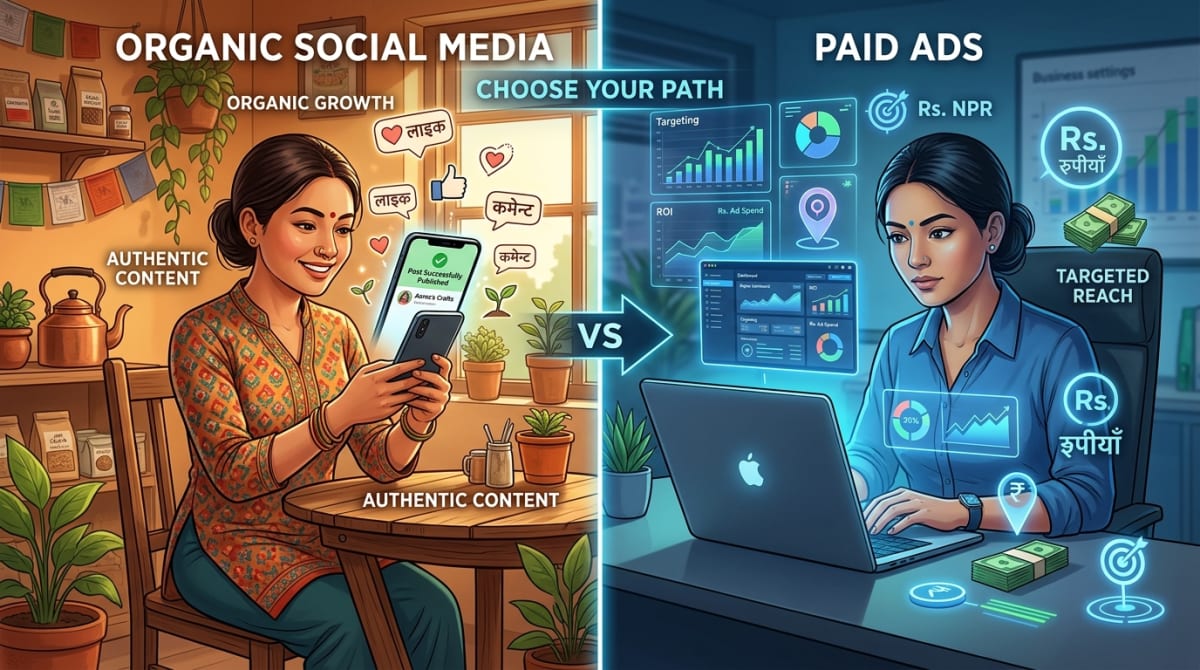
Search is a weaker fit when nobody searches for your category yet, for example a brand new product type, or an impulse purchase that people discover by seeing it. In those cases social media usually does the first job of creating demand. If you are still deciding where to start, our guide on social media management vs running ads covers that choice in more detail.
Before You Spend a Rupee: Three Things to Sort Out
1. A landing page that can actually convert
Every click sends someone to a page. If that page is slow, unclear or missing a phone number, you pay for the click and lose the customer. Google's own Quality Score diagnostic includes landing page experience as one of its three components, alongside expected clickthrough rate and ad relevance, according to Google Ads Help on Quality Score.
At minimum, the page your ad links to should:
- Load quickly on a mobile phone
- Match the ad. If the ad says "AC servicing in Birgunj", the page should be about AC servicing in Birgunj, not your homepage
- Show a clear next step: a call button, a WhatsApp or Viber link, or a short enquiry form
- Give people a reason to trust you: real photos, address, reviews, years in business
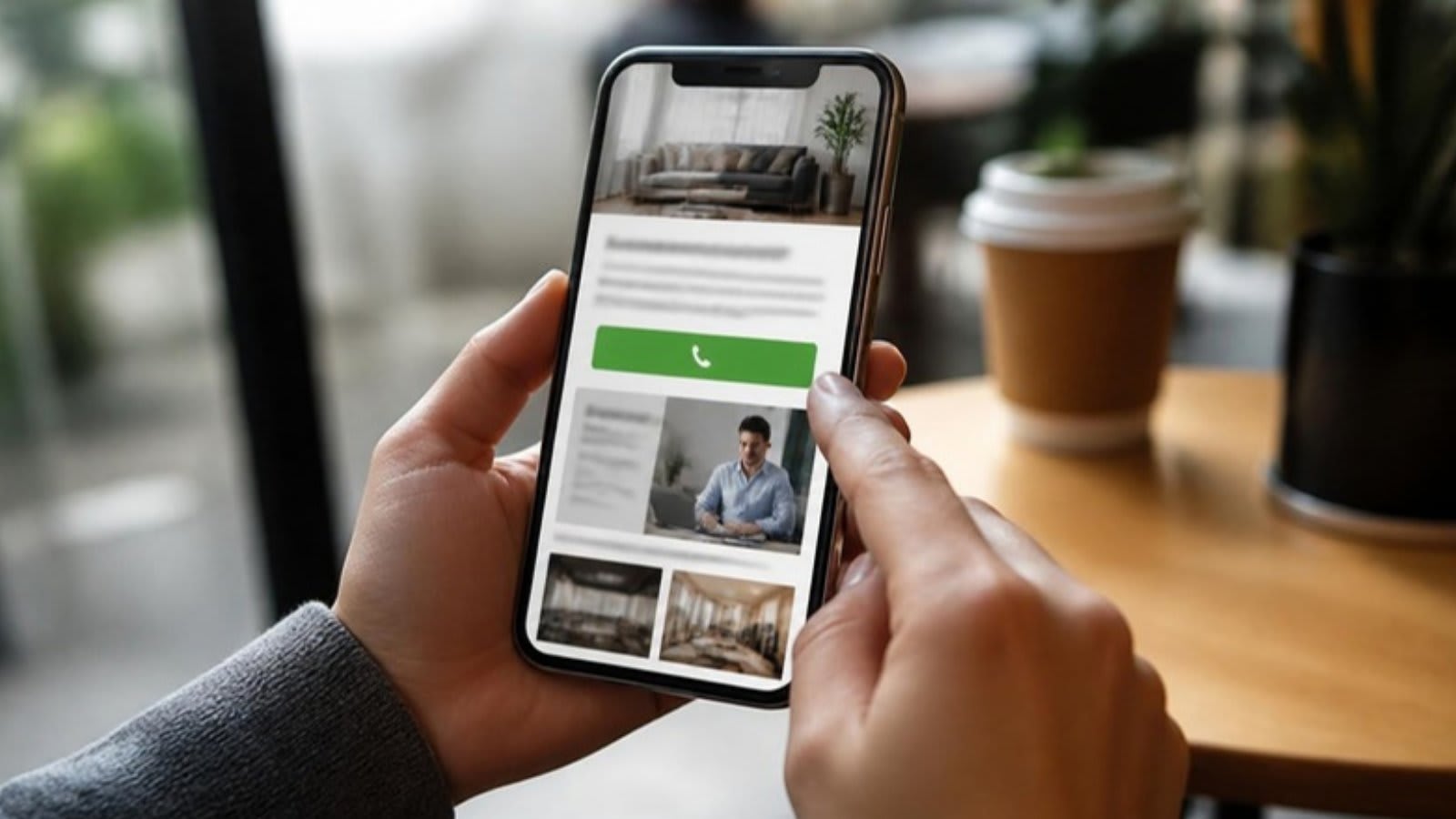
If your current website struggles here, fix that first. We explain the most common problems in why most Nepali business websites fail to get customers.
2. A way to pay
Payment is often the first practical hurdle. Google's payment methods page, with Nepal selected as the country, lists credit and debit cards as the available payment method. In practice that means a card your bank has enabled for international online payments. Several Nepali banks offer dollar cards or e-commerce cards for this purpose; Global IME Bank, for example, publishes a guide on using its card for Google Ads. Check the limits and fees with your own bank before you launch, so a declined payment does not pause your ads mid-month.
3. A clear definition of a "result"
Decide what a good outcome looks like before you start. For most local businesses it is one of these: a phone call, a form submission, a WhatsApp message, or a visit to the shop. Write it down. You will need it when you set up conversion tracking, and it stops you from judging the campaign on clicks alone.
Setting Up Your First Search Campaign
Google Ads offers several campaign types. For a first campaign with a small budget, a plain Search campaign gives you the most control and the clearest reporting. Here are the settings that matter most.
Location targeting: the setting most beginners miss
You can target a country, a city or a radius around your shop. What many advertisers miss is the advanced location option underneath.
According to Google Ads Help on advanced location options, the default is Presence or Interest, which reaches people who are in or regularly in your target area as well as people who have shown interest in it. The alternative, Presence, limits ads to people who are in or regularly in your locations.
Google recommends the broader option as a best practice for many advertisers, and it does make sense for some businesses. A Pokhara hotel, for instance, wants people in Kathmandu or India who are planning a trip. But a Birgunj repair service that only works locally usually gets nothing from someone in another country who searched for Birgunj once. For purely local services, we generally start with Presence and widen later only if volume is too low.
Budget: how Google actually spends it
You set an average daily budget, not a hard daily cap. Google explains that on busy days it may spend more and on quiet days less. For most campaigns you will not pay more than two times your average daily budget on any single day, or more than 30.4 times your average daily budget in a month.
So to plan, take your monthly budget and divide by 30.4. As an illustration only, a business comfortable with $150 a month would set an average daily budget of about $4.93. Start with a budget you can sustain for at least a month. A campaign that runs for one week and gets switched off rarely teaches you anything useful.
Bidding: keep it simple at first
Google pushes automated bidding (Smart Bidding) strongly, and it can work well. The catch is that it needs conversion data to learn from. Google's conversion measurement guide notes that Smart Bidding strategies need a learning phase of roughly 7 to 14 days, and that frequent changes to budgets or targets during that period reset the learning.
For a brand new account with no conversion history, a sensible path is to start with a simple strategy focused on clicks or conversions, set up tracking properly, let data build, and then move to strategies such as Maximize Conversions or Target CPA once you have a steady flow of recorded conversions.
Choosing Keywords Without Wasting Money
Keywords are where most budgets leak. The fix is understanding match types and using negative keywords from day one.
Match types in plain language
Google's keyword matching options page describes three types:
| Match type | How you write it | What it does |
|---|---|---|
| Broad match | inverter repair | Shows on searches related to your keyword, which can include searches that do not contain your exact words. Broad match is the default. |
| Phrase match | "inverter repair" | Shows on searches that include the meaning of your keyword, including more specific versions of it. |
| Exact match | [inverter repair] | Shows on searches with the same meaning or intent as the keyword. Most control, least reach. |
Google itself says broad match should be paired with Smart Bidding, because it relies on auction-time signals to decide which of the many related searches are worth entering. With a tiny budget and no conversion data yet, broad match can wander. That is why we usually start small accounts on phrase and exact match for the most valuable terms, then test broad match once tracking is reliable.

Build tight ad groups
Group keywords by the service they describe, not by everything you sell. A solar company might have separate ad groups for:
- Solar panel installation
- Solar inverter and battery
- Solar water heater
Each ad group gets its own ads and its own landing page. This keeps the ad text close to what people searched, which helps ad relevance.
Add negative keywords before launch
Negative keywords stop your ads from showing on searches you do not want. Google's example is an optometrist excluding "wine glasses" and "drinking glasses". One important detail from the same page: negative keywords do not match close variants, so you need to add singular and plural forms and synonyms yourself.
Common negatives for small Nepali businesses include:
- Jobs and training: job, vacancy, salary, course, training (unless you offer training)
- Free and DIY: free, download, pdf, how to make, DIY
- Wrong locations: cities or countries you do not serve
- Wrong intent: wholesale or retail, whichever you are not
Writing an Ad People Want to Click
Most Search campaigns now use responsive search ads. You give Google several headlines and descriptions, and it tests combinations. According to Google Ads Help, you can provide up to 15 headlines of up to 30 characters each and up to 4 descriptions of up to 90 characters each.
A few practical rules we follow:
- Put the service and location in headlines. "AC Servicing in Birgunj" beats "Quality Service You Can Trust".
- Give concrete reasons to choose you. Same day visit, warranty on parts, years in business, a specific number of completed projects you can actually prove.
- Write each headline so it stands alone. Google may show them in any order, so avoid headlines that only make sense after another one.
- Pin only what must always appear. Google lets you pin text to a position, but pinning too much reduces the combinations it can test.
- Do not put a phone number in the ad text. Use a call asset instead. Google's call assets page notes that placing phone numbers elsewhere in the ad text may lead to disapproval, while a call asset adds a tap-to-call button on mobile.
Alongside call assets, add sitelinks to your key pages and a location asset if you have a physical shop. If your Google Business Profile is not set up yet, our guide on why your Birgunj shop needs a Google Business Profile is a good place to start.
Track Conversions or You Are Guessing
Without conversion tracking, Google Ads can only tell you about clicks and costs. With it, you can see which keywords and ads produce calls, forms or messages. Google's conversion measurement overview lists the main benefits: learning which keywords and ads drive valuable actions, understanding return on ad spend, and enabling Smart Bidding.
For a local business, track at least:
- Calls from the call asset
- Clicks on the phone number on your website
- Form submissions (ideally the thank you page view)
- Clicks on WhatsApp or Viber links
If you already use Google Analytics, you can import key events into Google Ads. Google notes that after linking accounts or marking an event as a key event, it can take 24 to 48 hours before the import option appears.
The Weekly 20-Minute Check
Launching is the easy part. The campaigns that work are the ones someone looks at every week. Here is the routine we recommend:
- Open the search terms report. This shows the real searches that triggered your ads, as described in Google's search terms report guide. Add irrelevant terms as negatives. Add strong performers as keywords.
- Check cost per conversion by keyword. Pause or lower bids on keywords that spend steadily without results.
- Read your ads as a customer would. Are the headlines still accurate? Is the offer still current?
- Look at the Quality Score columns. Google describes Quality Score as a diagnostic, not a performance target, but a "Below average" landing page experience is a clear hint about where to work.
- Test one change at a time. Changing budget, bids, ads and keywords on the same day makes it impossible to know what worked.

Advertiser verification
Google is gradually asking all advertisers to complete advertiser verification. If your account is selected, Google will notify you with a deadline, and some ads may be restricted until you finish. Keep your business registration documents handy so this does not stall your campaign.
Frequently Asked Questions
How much should a small business in Nepal spend on Google Ads?
There is no universal number, because click costs depend on your industry and competition. A practical approach is to pick a monthly amount you can sustain for at least one to two months, divide it by 30.4 to get your average daily budget, and judge results on cost per enquiry rather than clicks.
Can I pay for Google Ads with a Nepali bank card?
Google lists credit and debit cards as the payment method for Nepal. Your card must be enabled for international online payments. Several Nepali banks offer dollar or e-commerce cards for this; confirm limits and fees with your bank.
Should I use Google Ads or improve my local SEO first?
They do different jobs. Ads bring traffic immediately but stop when you stop paying. Local SEO builds visibility that keeps working. Many businesses run a small Search campaign while they build their organic presence.
Why are my ads getting clicks but no calls?
Usually one of three reasons: the keywords are too broad and attract the wrong searches, the landing page does not match the ad, or there is no easy way to contact you from a phone. Check the search terms report first, then test the page on your own mobile.
How long before I know if Google Ads works for my business?
Give a properly tracked campaign at least four weeks. Automated bidding alone needs roughly one to two weeks to learn, and you need enough clicks to see patterns in which keywords convert.
Conclusion
Google Ads rewards businesses that treat it like a tool to be tuned, not a switch to be flipped. Sort out your landing page, payment and definition of success before you start. Use tight ad groups, phrase and exact match for your best terms, and negative keywords from day one. Track every call and form, and give the campaign twenty minutes of attention every week.
If you would rather have someone set up and manage your first campaign, or audit one that is spending without results, the team at Media Mitra Technologies can help. Get in touch with us and tell us what you want more of: calls, enquiries or footfall.